Wasp Nest and Bee Removal in Columbus
For yellowjackets in the ground or inside a wall, call a licensed pest control company. A small paper wasp nest under the eaves needs one visit at most, or careful DIY. Honey bee swarms go to a beekeeper.
Call (614) 699-5527Ask for an inspection
Licensed companies only: an Ohio Department of Agriculture pesticide business license. Check any license yourself
On this page
Which call to make depends on what is flying in and out of the nest. Here is how to tell the common Columbus stingers apart, which ones need a professional, and which ones you can leave alone until frost.
Yellowjackets in the ground and in walls
Yellowjackets are the late-summer problem in most Columbus yards. Ohio State University Extension's yellowjacket fact sheet says they nest in old animal burrows and mulch piles, rotted stumps too, and in protected spots such as wall voids and ceilings. A ground nest is often found the hard way, by a mower.
The colonies get big. OSU says a nest can reach about 4,000 to 5,000 workers by August to late September. From August to October their diet shifts from protein to sweets, which is why they show up at every cookout and trash can. Unlike honey bees, yellowjackets can sting repeatedly, and they defend the nest hard.
OSU's own advice is to hire a professional to kill and remove wasp nests. For a yellowjacket nest in a lawn, a play area or a wall, I agree. OSU describes treating the entrance with an insecticide dust at sunrise, when the wasps are inside. Ask whether a return visit is included if the nest is still active.
If you are not sure what is going in and out, a photo from a safe distance helps a technician tell you before anyone comes out.
Why not to seal a yellowjacket nest in a wall
The tempting fix for wasps going in and out of a gap in the siding is to caulk it or fill it with spray foam. Do not. OSU's yellowjacket sheet warns against plugging the entrance, because disturbed wasps may find their way into the house. A wall nest with its front door blocked looks for another way out, and the nearest one may lead into a room.
The right order is to treat the nest through the entrance, wait until there is no more traffic, and only then seal the gap. If the nest is large, the company may suggest opening the wall to remove it. This Old House notes that wall nests are among the more expensive jobs partly because of drywall repair.
Paper wasps and hornets
Paper wasps build the open, umbrella-shaped nests you see under eaves and on play equipment, with the cells and the wasps all exposed. Utah State University Extension says they are less aggressive than yellowjackets or hornets, and that each colony dies off in the fall. A small paper wasp nest away from a door can often be left alone. One by the front door or a child's window is worth removing. If you see wasps along with ants or spiders around the foundation, our general pest control page covers what a routine visit includes.
Bald-faced hornets are aerial yellowjackets with ivory-white face markings. Penn State Extension says they build gray, football-shaped paper nests in shrubs at least 3 feet up, in trees as high as 60 feet, and sometimes under eaves. A Pennsylvania nest can reach 24 inches tall and hold 100 to 400 workers. Penn State suggests leaving most nests alone, since the wasps are beneficial. Removal makes sense within about 10 feet of a door, under a low eave, or in a shrub next to the lawn you mow. Spraying one badly, Penn State warns, angers the colony for days.
European hornets are larger, 1 to 1 1/2 inches long, and nest in hollow trees and inside walls or attics, according to an OSU fact sheet. They are one of the few hornets that fly at night, so you see them bumping at lit windows after dark.
Wasps inside the house
A wasp or two in the house in fall is usually a stray that came in through a door or a torn screen. Several a day, especially in the same room, usually means a nest in the wall or attic that has found a way into the living space. Look for them near outlets, ceiling lights, a bathroom fan, or the attic hatch.
What to do right away:
- Close the door to that room and put a towel along the gap under it.
- Do not seal the outside entrance, and do not spray foam into the wall.
- Keep anyone with a known sting allergy out of that part of the house. If you rent, say so in your written maintenance request, since it changes how fast a nest by a door or window needs to go.
- Note where the wasps come in outside, if you can see it from a safe distance.
This is the one wasp situation I would not wait on. If wasps are coming into the living space, call now.
Carpenter bees in porch wood
Carpenter bees look like bumble bees, but OSU's carpenter bee fact sheet says their abdomen is mostly bare and shiny black, where a bumble bee's is hairy with yellow markings. Males hover at your face but have no stinger. Females are docile and are reported to sting only if handled.
They bore round holes slightly less than half an inch wide, mostly in unpainted softwoods such as cedar and pine. In a Columbus house that means fascia boards and eaves, plus porch ceilings and decks. Adults come out in April and early May. The damage is slow, but repeat use of the same tunnels over many years adds up, and woodpeckers will tear up the wood going after the larvae.
OSU's control is insecticide dust worked deep into each hole, then waiting a few days before plugging the holes. The longer fix is paint. OSU says exposed wood kept painted with polyurethane or an oil-based paint resists them, and that stain will not prevent damage. A one-time treatment plus paint is the plan I would pick over a service contract.
Honey bee swarms: call a beekeeper
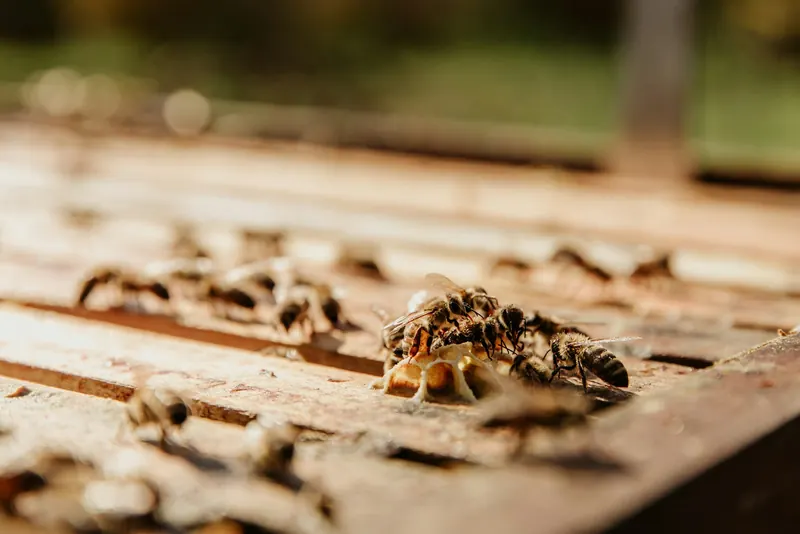
A ball of bees hanging from a branch or fence in spring is a honey bee swarm looking for a new home. Do not spray it. Call a beekeeper.
The Central Ohio Beekeepers Association posts swarm and cutout lists of members by ZIP code and service area. You contact members directly with photos and details: how long the bees have been there, how high they are and where. The association notes that time matters, so you may need to try more than one member, and it is not responsible for the removal itself. Ask each beekeeper about pricing.
Honey bees already living inside a wall are a different job, called a cutout, where the comb is removed along with the bees. The association keeps a separate cutout list of members who do that work. I would call a beekeeper on that list before anyone sprays a honey bee colony.
Timing and cost
Most of these colonies are annual. OSU says yellowjacket workers and the old queen die when cold weather arrives, and Penn State says bald-faced hornet colonies die off around the first hard frost. Only new queens overwinter, away from the nest. In Columbus the median first fall freeze is October 29, per our NOAA record. So a nest you find in late October that is out of everyone's way can often be left until it dies. A nest found in August, at the edge of a patio, is the one to treat now, because it will keep growing into September.
Published national prices from This Old House (updated June 5, 2026), not our quotes:
| Job | Published range |
|---|---|
| Wasp removal overall | $100 to $1,300, average $375 |
| Paper wasp nest | $100 to $400 |
| Bald-faced hornet nest | $400 to $800 |
| Yellowjacket nest | $500 to $1,300 |
Before you agree to a price, our quote checklist shows what a fair written estimate includes. Nests underground or inside walls cost more, and height adds about $5 to $10 a foot above the second story. For one nest, a one-time visit is enough. I would not sign a monthly plan for it. Our one-time vs quarterly guide and Columbus cost guide cover that choice.
Anyone applying pesticides on your property for hire in Ohio needs a commercial applicator license (ORC 921.06). We only refer companies that hold an Ohio Department of Agriculture pesticide business license and send licensed commercial applicators, and you can check a license yourself. For a nest that needs to go, ask for a written price before any treatment.
Questions people ask
Should I seal a yellowjacket nest in my wall?
Not while it is active. Ohio State Extension warns that plugging the entrance can send disturbed wasps into the house. Treat the nest first, wait for traffic to stop, then seal the gap.
Who removes bee swarms in Columbus?
Local beekeepers. The Central Ohio Beekeepers Association posts swarm and cutout lists of members by ZIP code, and you contact them directly with photos and details.
How much does wasp nest removal cost?
This Old House lists $100 to $1,300 nationally, with an average of $375, updated June 2026. Paper wasp nests run $100 to $400. Yellowjacket nests run $500 to $1,300, and ground or wall nests cost more.
Will a wasp nest die in the winter?
Yellowjacket and bald-faced hornet colonies die with cold weather, and only new queens overwinter away from the nest. A nest found in late October that is out of the way can often be left alone.
Do carpenter bees sting?
Males have no stinger, and Ohio State Extension says females are docile and reported to sting only if handled. The concern is the holes they bore in unpainted softwood.
Sources
- Ohio State University Extension, HYG-2075 Yellowjackets (D. Shetlar, J. Andon, B. Bloetscher, January 5, 2012)
- Ohio State University Extension, HYG-2074 Carpenter Bees (S. Jones, July 3, 2017)
- Ohio State University CFAES, ENT-0102 European Hornets and Look-Alikes (A. Kulhanek, February 21, 2025)
- Penn State Extension, Baldfaced Hornet (S. Jacobs, updated June 24, 2026)
- Utah State University Extension, Paper Wasps (accessed October 28, 2026)
- Central Ohio Beekeepers Association, Services: Swarms and Cutouts (accessed October 28, 2026)
- This Old House, Wasp Exterminator Cost (updated June 5, 2026)
- NOAA NCEI daily records, Columbus John Glenn International (USW00014821), 2001 to 2025
- Ohio Revised Code 921.06, Commercial applicator license